Are There Lifeguarded Beaches in Skikda? 2026 Guide
Beach safety and lifeguard presence in Skikda and Filfila: which beaches, comparison, and practical tips for swimming safely.
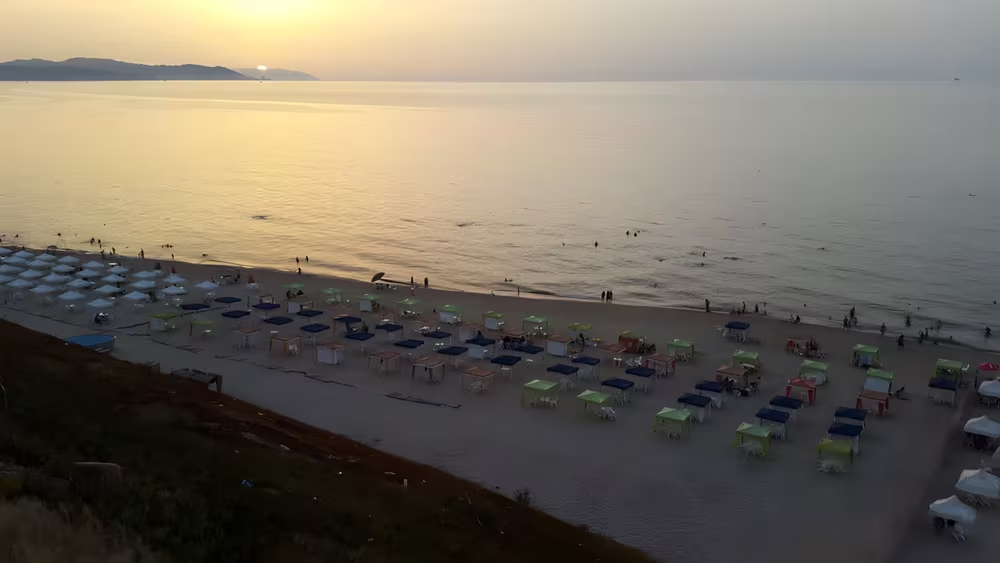
The question comes up often before a beach holiday: are there lifeguarded beaches in Skikda? The direct answer is nuanced: a security presence is possible on the busiest beaches of the wilaya, particularly Grande Plage and Larbi Ben M'hidi (formerly Jeanne d'Arc), especially in high season and during the day. But no beach along the coastline has permanent, guaranteed supervision the way a continuously monitored pool does. Real safety depends on a combination of factors: the beach chosen, the time of day, the season, and above all each swimmer's own vigilance.
This guide reviews the actual level of supervision on the coastline between Skikda and Filfila, offers a beach-by-beach comparison, details the signals to watch before swimming, and lays out good habits to adopt when no supervision is visible. The goal is to give francophone travellers and the diaspora realistic information, without false promises or unnecessary alarm.
The real level of supervision along the Skikda coastline
Unlike some highly structured beach destinations, the coastline of the Skikda wilaya does not have a uniform network of lifeguard posts active all day on every beach. The reality varies considerably depending on footfall, the season and the exact stretch of shore.
A presence tied to footfall, not a uniform official status
The busiest beaches in high season, such as Grande Plage or Larbi Ben M'hidi, statistically have a better chance of a security presence during the day, particularly on weekends. This presence still varies from one day to the next and is never guaranteed at every hour. On more isolated coves and less developed stretches of coast, supervision is weak, irregular, or entirely absent.
The effect of nearby tourist complexes
Areas near complexes such as Rusica Park 4★ or Royal Tulip 5★, or the Marina d'Or Water Park in Filfila, sometimes benefit from extra vigilance linked to their own guests and on-site staff. This presence does not replace a public lifeguard post, but it increases the number of potential witnesses in case of a problem, a practical safety factor worth considering for travellers.
Supervision comparison by beach
The table below summarizes the situation observed on the main beaches between Skikda, Filfila and Stora. It reflects a general trend rather than a guarantee, as the situation can vary from one season to the next.
| Beach | Footfall | Chance of supervision | Profile |
|---|---|---|---|
| Grande Plage | High in summer | Moderate to good by day | Fine sand, family-friendly |
| Larbi Ben M'hidi (formerly Jeanne d'Arc) | High | Moderate to good by day | Long sandy beach, easy access |
| Filfila | Medium to high | Variable | Close to furnished residences |
| Les Calatines | Medium | Low | Wilder coves, variable seabed |
| Stora | Medium | Low, harbour-focused | Fishing harbour atmosphere |
| Collo | Local, more isolated | Low | Still-preserved coastline |
What this comparison shows
None of the beaches listed reaches the level of permanent supervision. The main difference lies in the likelihood of a presence during peak summer hours and the number of potential witnesses nearby, two factors that weigh more heavily on actual safety than a simple "lifeguarded beach" sign.
Signals to watch before swimming
With no uniform official signage along the whole coastline, reading the state of the sea remains the most useful skill for any swimmer, whether alone, as a couple, or with family.
- Waves noticeably higher than the day's average, a possible sign of strong offshore wind
- Cloudy water or a sudden colour change, often after rain or a gust of wind
- A visible current perpendicular to the shore, to avoid crossing
- Strong, constant wind, even under a clear sky
- A total absence of other swimmers at a normally busy time, an indirect signal worth taking seriously
What to do without visible supervision
Most swimming sessions in Skikda go without incident, but adjusting behaviour when no formal supervision is present meaningfully reduces the risk, without giving up the pleasure of the sea.
- Stay in a shallow, well-frequented area rather than isolating yourself on an empty stretch
- Avoid swimming alone beyond where you can stand
- Watch children constantly, without relying on a hypothetical security presence
- Carry a charged phone and locate the nearest health facility before swimming
- Favour busier hours (mid-morning, early afternoon) if you want more potential witnesses nearby
- Ask locally at the accommodation or beach shops about the day's sea conditions
Seasonality and the best windows for safe swimming
The swimming season in Skikda generally runs from June to November, with the water reaching around 26 °C in August. July and August combine the most stable weather with the highest footfall, and therefore the greatest likelihood of informal security presence on the main beaches. June and September offer an already or still pleasant sea, with fewer people but also fewer potential witnesses on the sand, a trade-off worth weighing according to the traveller's profile.
The case of isolated coves
The less accessible coves, particularly around Les Calatines or toward Collo, appeal for their preserved setting but call for extra caution: fewer people, often a more irregular seabed, and no realistic expectation of supervision. They suit confident swimmers better than a first family swim.
What to do in case of a problem on a beach
In case of an accident or a medical issue, stay calm, get the person out of the water and immediately alert nearby people as well as the closest lifeguard post if one is present that day. Without an identifiable lifeguard post, head to the nearest health facility or ask staff at surrounding tourist complexes and hotels for help, as they are generally able to direct you quickly toward care.
Where to stay to enjoy the beaches with peace of mind
Choosing accommodation indirectly affects perceived safety during a stay: the closer it is to the sea, the shorter the trips, and the easier it is to head back quickly in case of tiredness, sunburn or changing weather. Résidence Oasis sits 700 m from the sea in the Jeanne d'Arc district of Filfila, with Larbi Ben M'hidi beach reachable about 7 km away, roughly a fifteen-minute drive, to vary the outings. The available studios and F2/F3 units cover different group sizes, from couples to extended families, and the F3 with private terrace suits a family planning several beach outings a day particularly well.
Booking and practical terms
Booking is done directly via WhatsApp, with a one-night deposit paid by bank transfer to confirm the dates, balance settled on arrival in dinars or euros, no deposit required. A 10% discount applies from 7 nights onward. For any question about beach access or organizing the stay, the contact page and directions remains the fastest channel.
Conclusion
Some form of supervision exists on Skikda's busiest beaches, notably Grande Plage and Larbi Ben M'hidi in high season, but no beach in the wilaya offers permanent, guaranteed supervision. Real safety depends above all on the beach chosen, the time of day, reading the state of the sea, and each swimmer's personal vigilance. Applying these simple habits keeps the vast majority of beach stays in Skikda incident-free. To compare all the wilaya's beaches and prepare a relaxed stay, the residence photo gallery and more tips on the blog cover each site in more depth.
FAQ
Are there lifeguarded beaches in Skikda?
Some form of supervision exists on the busiest beaches, notably Grande Plage and Larbi Ben M'hidi (formerly Jeanne d'Arc), especially in high season. But no beach in Skikda has permanent, guaranteed supervision. Security presence remains variable by time and day.
Which Skikda beaches are most likely to be watched?
Grande Plage and Larbi Ben M'hidi see the most footfall in July-August, increasing the likelihood of a security presence. Stora and the Les Calatines coves remain less supervised.
At what time is supervision most likely?
Security presence, when it exists, concentrates around midday and on weekends during high season. Early morning, evening and off-season, don't count on it.
How do you know if swimming is safe on a given day?
Observing the sea remains the most reliable habit: big waves, cloudy water or strong wind are warning signs. Asking locally at the accommodation usefully complements direct observation.
What should you do on a beach with no visible supervision?
Adjust your caution: stay in a shallow, busy area, watch children constantly, and favour busier hours. See contact page and directions to organize the stay.
Are the beaches near Filfila better supervised than those near the city centre?
Not necessarily by an official authority, but often busier with guests from furnished residences and tourist complexes, which increases potential witnesses in case of an incident.